
Lotus travel and Tours in Sri Lanka
Get away the right way
+971555800848 / +94772609960

 |  |  |
|---|---|---|
 |
Most Beautiful places in Sri Lanka
Sri Lanka was famously described by Marco Polo as one of the finest islands in the world, and it has a history that dates back thousands of years. Although it’s small, there is so much history, nature, and beauty to see in this country. Explore the beaches, jungles, tea plantations, temples, and much more from our list of the most beautiful spots in Sri Lanka.


Mirissa
MIRISSA 154 KM (95 Miles) From Colombo
Mirissa is a small heaven located in the South Coast of Sri Lanka, only about 200km away from the Equator. The small town is ever-famous for it's natural beaches which are mostly untouched by any man-made modernization, which makes it well-loved and very sought after when it comes to holidays and vacations, even—honeymoons.
Mirissa's sandy beaches gives life to your fantasies of a tropical heaven, the secluded crescent shaped beach is like a reclusive hidden Island that is a hideaway for many. The town's sunsets and sunrises are said to be one of the finest ever, the peace that surrounds people spending time in the hotels set aback from the actual beach is quiet unmeasured. The gentle waves of the ocean crashing and building into a crescendo, coconuts falling and birds chirping. Mirissa is a tourist heaven and must not be missed!
Mirissa Beach
The sandy beach with it's golden sand and undeniably warming atmosphere with chilled breezes, the perfect combination of hot and cold is a travel location that's the envy of many countries.
The beach offers the peace you can't find elsewhere, the hotels provide the customers with everything that they require; even with many people occupying the beach, the noise and rush is minimum.
Surfing at Mirissa
Mirissa's Bay Surf point is famous for smooth surfing; you can surf with no inhibitions and enjoy a carefree ride through the ocean, experiencing it on a level that would be unforgettable for the many years to come.
Dolphin and Whale watching
Sri Lanka's Navy Passenger Craft called ‘Princess of Lanka’ was launched in 2011 and since then has been a vessel for people who want to enjoy a profound activity such as Whale Watching.
A person has a firsthand experiences watching the humongous creatures wriggle about and float underwater, the scene is truly enrapturing. The dolphins are extremely friendly as well, giving people a show of a lifetime. Their packages are reasonable and would suit a average person nicely. The Whale Watching activity is famous among avid tourists


Nuwara Eliya
NUWARA ELIYA 165 KM (103 Miles) From Colombo
Nuwara Eliya meaning "city on the plain or "city of light" is a town in the central highlands of Sri Lanka. It is one of the major tea producing areas in the world. The tallest mountain in Sri Lanka "Pidurutalagala" oversees this beautiful city. It is the most visited hill country.
History
Nuwara Eliya is said to have been founded by a couple of British officers who apparently got lost while elephant hunting. The British governor Sir Edward Barnes was notified about the town and he himself decided to reside at Nuwara Eliya and subsequently creating a health resort that was internationally renowned. The town was later the ultimate destination for English pastimes such as golf, fox hunting, polo, etc. Nuwara Eliya also has an archeological importance as well in which pre-historic human remains are found. The city is has a good reflection of the colonial period even new hotels are furnished according to the colonial era.
Modern Day Nuwara Eliya
Nuwara Eliya is now a modern, busy city with department stores, fast food chains. Nevertheless the further away you are away from the busy town the more you will be revisiting the past. Tourists will find a variety of recreational activities to do in this beautiful city, Nuwara Eliya is known to have the best 18-hole golf course in Asia and that's not all horse-riding, boating, bird-watching and hiking are few of the many fun things you can do.
Tea Production
Sri Lanka is produces a significant share of the world's best tea and in the mean time is also one of the world's largest exporters of tea. Since the introduction of tea to Sri Lanka in mid 19the century Nuwara Eliya has been the capital of the tea industry.
Waterfalls
Little England" is also home to some beautiful waterfalls such as Ramboda Falls, Devon Falls, and Laksapana Falls. Trekking and hiking expeditions usually evolve around these land marks.
Climate
Natives usually tend to visit the hill country during the summer time, just to escape the excess humidity that accompanies with the heat since Nuwara Eliya has a average temperature of 16 degrees and sometimes can decrease to extreme conditions such as 3 degrees due to the high altitudes.
Seetha Eliya
Seetha Eliya is a village in which the Seetha Kovil is located (Hanuman Kovil) and is found on the way to Badulla. The Temple is said to be built where the king Ravana hid princess Seetha from Rama.
Horton Plains
Horton Plains is yet another national park in Sri Lanka located at the highest plateau in the island. The park is very famous among nature lovers. However within Horton Plains are the World's End exhibiting an abrupt drop of 1000m offering a breath-taking view of land including tea estates.


Galle
GALLE 128 KM (79 Miles) From Colombo
Galle is situated in the southwestern tip of Sri Lanka; it is one of the country's integral cities. Galle has a colorful history and beauty that renders many speechless.
The city is filled with Dutch-colonial buildings people come from faraway places to see. The air is filled with the sweet smell of spices and the salty winds give it a authentic recognition. Galle is filled with art that's rare, the streets are filled with people who are ambitious and hardworking, showcasing their efforts in one the best displays that please the eye immensely.
The classic architecture fuses with the tropical setting that's the envy of many man-made resorts and architects.
Galle is said to be a heavenly piece of art, tropical heaven and rich in history.
Galle Fort
The fort built by the Portuguese in 1588 holds most of the attention as you can explore the city of Galle through it's walls. The Fort has a multi-religious ethnic population and embedded deep inside it's walls is a rich history people are besotted with. This glorious building suffered through the Boxing Day Tsunami and was later restored to it's magnificent beauty. It has been given the title of Unesco World Heritage Site because of it's endless glory. It's a beautiful travelling location which gives you a experience that's hard to forget.
Galle History
Galle's history is a wonder in it's own. Under the dominance of Portuguese and Dutch for a long period of time, it suffered through a thousand changes. It was referred to as Gimhathiththa in the 16th century before the Portuguese took over. But Galle showed it's true potential in the Dutch-colonial period, the buildings they constructed are sight seeings wonders people wish to see to this day.
It suffered through a massive tsunami but the city has been restored to it's original beauty and stands to be one of the best tropical areas on the planet, a tourist's heaven*


Yala
YALA National Park 305KM (190Miles) From Colombo
Yala National Park is situated in the south-east region of Sri Lanka and is the 2nd largest National Park in the island, situated some 300 km away from Colombo. It was at first established in the early 1890s as a game sanctuary . The park is located in the dry-zone region where the drought season is very long .The day time average temperature is over 30 degrees which is not uncommon in the region. The parkland makes up most of the reserve but also includes lakes, beaches, jungle, rivers and scrubland. This variety in habitats provides an excellent range in wildlife. The largest concentration of Leopards can be seen in this region though the chances of seeing this animal are very low, and the creature is said to be one of the most endangered species. About 32 species of mammals, 125 species of birds and many reptiles and lagoon fauna species have been recorded in the park. The Yala National Park is famous among visitors as the best place to view large mammals within one territory.
History
The Yala National Reserve was a part of the Ruhuna Kingdom. The Situl Pahuwa temple housed more than 12000 inhabitants. The Magul Mahavihara, which is also another temple within the park was the place where King Kawantissa and Vihara Maha Devi were married.
Cultural Significance
Yala was where Ravana established his kingdom. The many mane-made tanks show that yala was used as an agricultural center with an intensive irigation system. The temple Situlpahuwa is within Yala and was built during the 87 BC and the Akasa Stupa in 2 BC. During the colonial era Yala was used as a place to hunt down game. Even today more than 400,000 pilgrims visit the stupas within the confinements of thepark.


Sigiriya
Earlier is was a rock-shelter mountain monastery which was donated by Buddhist devotees. Later King Kassapa renovated it by building gardens and palace. After his death it was again used as a monastery.
Human habilitation in Sigiriya at its earliest was found to be nearly five thousand years during the Mesothilic period.
Rock inscriptions are carved near the drip ledges on many of the shelters, recording the donation of the shelters to the Buddhist monastic order as residences. These have been made within the period between the third century B.C and the first century A.D.
In 1831 Major Jonathan Forbes of the 78th Highlanders of the British army while returning on horseback from a trip to Polonnaruwa came across the "bush covered summit of Sigiriya". Sigiriya came to the attention of antiquarians and later archaeologists.
The Sigiriya complex itself consists of the central rock and two rectangular precincts which are surrounded by two moats and three ramparts. The city is based on a square module.
Structure of the Lion Rock
The Sigiriya Rock is actually a hardened magma plug from an extinct volcano. The most significant feature of the rock would be the Lion staircase leading to the palace garden. The Lion could be visualized as a huge figure towering against the granite cliff. The opened mouth of the Lion leads to the staircase built of bricks and timber. However the only remains of this majestic structure are the two paws and the masonry walls surrounding it. Nevertheless the cuts and groves in the rock face give an impression of a lion figure.
Frescos
There are only two pockets of paintings covering most of the western face of the rock. The ladies depicted in the paintings have been identified as Apsaras. However a lot of these ladies have been wiped out when the palace was again converted into a monastery so as to not to disturb meditation.
The Gardens
The gardens are amongst the oldest landscaped gardens in the world. The gardens are divided into three distinct but linked forms; water gardens, Cave and boulder gardens, and terraced gardens.
The Mirror Wall
Originally this wall was so well polished that the king could see himself whilst he walked alongside it. Made of a kind of porcelain, the wall is now partially covered with verses scribbled by visitors to the rock. Well preserved, the mirror wall has verses dating from the 8th century. People of all types wrote on the wall, on varying subjects such as love, irony, and experiences of all sorts. Further writing on the mirror wall has now been banned.


Hikkaduwa
HIKKADUWA 119 KM (73 Miles) From Colombo
Hikkaduwa is the name of a small town which is located on the south coast of Sri lanka around 98 KM on the south of Colombo. It is well known for the Hikkaduwa beach which is labeled as one of the best surfing site in Sri Lanka and for Hikkaduwa Coral Sanctuary which is located a few meters away from the shore.
Hikkaduwa Beach and Surfing
Hikkaduwa beach is one of the most popular tourist places in Sri lanka Known for the harmonized and calm environment. The Beach is considered to be one of the finest places in the country for surfing and it is also well known for seafood currie which gives an extraordinary touch while having the perfect day on the beach. You can enjoy Surfing to the fullest in the months of November to March when waves rise up. Many tourists have recommended surfing in these months.
Hikkaduwa Coral Sanctuary and Snorkeling
While enjoying the beach and the sea, it is necessary to have a look inside the sea to investigate and examine the aquatic life. Whoever has visited the Beach has highly recommended snorkeling. It is very much suitable if one wants to watch all the beautiful fishes and marine life closely. People get a chance to look at a lot of different types of small and big fishes and turtles etc. very closely. So, whenever you get the chance to visit Sri Lanka and especially Hikkaduwa beach, don’t forget to experience surfing as well as snorkeling, it will be an experience of a life time.


Ella
ELLA 208 KM (129 Miles) From Colombo
Ella, often described as ‘’lonely planet’’ and ‘’waterfall’’ is a congested town located in Sri Lanka. Ella is pure natural beauty, with its waterfalls, greenery, and hills it is just jaw-dropping. It has views that one hasn’t witnessed before, scenes one hasn't seen before and nature one hasn't felt before. Ella is the perfect place to go to if one wants to refresh the brain. It has many famous places and has been under the attention of tourist for a decent amount of time now.
Ella Rock
One of Ella’s wonders is the Ella Rock. Ella rock might be a long way up but it’s worth all the struggle. Every day, tons and tons of people go and climb the Ella Rock. This is because of the special view it provides to its climber. The view from the top of the Ella Rock is difficult to put in such simple words.
Nature
Ella is filled with nature; everywhere one sees he gets to know why people want to visit Ella so much. The greenery, flowers, gardens all of them shape the beauty of Ella, a shape that is difficult to resist. The environment is fresh and clean.
Waterfalls
Another wonder of Ella is its waterfalls. Ravana falls is a very popular waterfall. The refreshing and clean water that slide down on earth. It is one of the most popular sites in Sri Lanka. However, this panorama is just so attractive.
People from all around the world come to visit this place because of its natural beauty and its beautiful outlook.


Haputale
HAPUTALE 173 KM (107 Miles) From Colombo
Located in the Badulla District, and is 4695 ft high above the sea level. It is one of the places with a very rich biodiversity and allows a very beautiful view of the Southern Plains. It is approximately 193 km away from Colombo. The town is no doubt one of the spectacular places in Sri Lanka. Haputale is makes hiking and trekking a great exhilarating exercise. The major attraction of Haputale is the Liptons seat, Adisham Bungalow and the famous Dambatenna tea factory.
The Climate
Due to its elevation the temperature is significantly lower than other parts of the country, running a temperature of approximately less than 25 degrees.
Adisham's Bungalow
One of the few remnants of the British Colonial, during which a Kentish gentleman built this magnificent mansion which is also influenced by post victorian architecture. Right next to it is the Tangalamalai Bird Santuary where paradise flycatchers and many more birds of the such can be seen.
Lipton's Seat
The Lipton tea factory founder was said to have bought the estate on which the factory built because he fell in love with the breath-taking panoramic view, which today is known as the Lipton's seat, however the mist tends to set in during the evening so the journey up the lipton's seat should be made early in the morning.


Pasikuda
PASIKUDAH 297 KM (184 Miles) From Colombo
Beautiful beach along with coral reefs and amazing hotels awaits you people to visit Pasikudah in Sri Lanka Pasikudah is a coastal resort town located at a distance of 35 kilometers northwest of Baticola district Sri Lanka. This place is an exciting place not only for the tourists but some religious people who believes in Buddhism often visits this place. As a lot of beautiful temples were also there for your religious ethics and practices.
Since the end of civil war in 2009 against the Black Group of Tamils, Places like Pasikuda gained more importance as tourism become active once again in Sri Lanka. For Tourists comfort an airport near the Batticola had been working from many years and giving an easy travel service so that they could reach their destinations without any problems faced.
If we talk about the attractions present in this resort town then there are a lot of things which we cannot expressed in this article and you should visits once in your life this beautiful place.
Pasikuda is a great place to enjoy your holidays also as a number of world class hotels awaits you to spend some time there along with your family and friends.
Pasikudah Beach
You would have visited a number of beaches in your life but would not have visited the famous Pasikuda beach a sight full of natural delights one could see in his life. Swimming in the sea and enjoying sun bath are all exciting plans for your vacations but when you choose this destination you enjoy it better than anywhere else that is the reason tourists came here every year for their vacations.
Coral Reef Snorkeling
Pasikuda along with its beautiful beach also gives you the opportunity for coral reef snorkeling and deep sea diving which would be loved by your family in such an amazing place. Everyone likes to collect coral reefs and some people are found to collect them as their hobby and if we talk about the sea diving then there is complete safety measures taken as tourists are not only customers but guests first.


Anuradhapura & Polonnaruwa
ANURADHAPURA 213 Km (132 Miles) From Colombo
Anuradhapura is one of the ancient cities in Sri Lanka, well known for its ruins depicting early Sri Lankan civilization. It is very famous among Buddhists pilgrims. Anuradhapura was earlier the capital of the Island (in ancient times) and most of the Kings who ruled Sri Lanka resided in this vast city. The city is now named as a world heritage site by UNESCO.
History Anuradhapura
On the contrary to the historical data that indicates that the city is founded in the 5 century BC archeological data puts that date back to far as the 10 century BC. However it was King Pandukabhaya who planned the layout of the city and made it his capital in the 4th century BC. He constructed many reservoirs and shrines. The city reached its highest magnificence by the beginning of the Christian era. The city boasted some of the most complex irrigation systems in the ancient world.
The ruins in Anuradhapura
Ruins are the only remains of what Anuradhapura used to be. Ruins generally have three classes of buildings:
1.Dagobas ( bell-shaped masses of masonry)
2.Monastic Buildings
3.Pokunas ( bathing tanks/ tanks that supply water for drinking)
Major Tourist Attractions at Anuradhapura
The Eight Great Places For Veneration.
1. Sri Maha Bodhi – It is the sacred Bodhi Tree ( Fig Tree ) which is believed to be a direct descendant from the original Bo tree under which The Lord Buddha reached his enlightenment.
2. Ruwanwelisaya – It is the stupa built by King Dutugamunu. The stupa is considered as one of the world's tallest monuments.
3. Thuparamaya – It is another dagaba in Anuradhapura. Following the introduction of Buddhism to Sri Lanka it was the first dagaba to be built in Sri Lanka which also enshrines the collarbone of the Buddha.
4. Lovamahapaya – Also known as the Brazen Palace or Lohaprasadaya. This building was also built by King Dutugamunu.
5. Jetavanaramaya – The Jetavanaramaya is yet another stupa which was initiated by King Mahasena. A part of a sash or belt which was used by the Buddha himself is believed to be enshrined here.
6. Abhayagiri Dagaba - This ruin is considered one of the most extensive ruins in the world and has a roof made of gilt bronze or tiles of burnt clay. The Abhayagiri Dagaba attracted scholars in the ancient times from all over the world.
7. Mirisaveti Stupa– Another masterpiece built by King Dutugamunu.
8. Lankarama – This stupa was built by King Valagamba.
POLONNARUWA 224 KM (139 Miles) From Colombo
Polonnaruwa is the Island's 2nd largest kingdom. Today the ancient city of Polonnaruwa remains one of the best planned Archeological relic sites in the country, standing testimony to the discipline and greatness of the Kingdom's first rulers. Its beauty and serenity was captured in the Duran Duran music video Save a Prayer in 1982. The ancient city of Polonnaruwa has been declared a World Heritage site by UNESCO. The Lankathilaka temple and a colossal statue of the Buddha made from stone is located here.
Ancient city of Polonnaruwa
Polonnaruwa is the 2nd largest city in north central province. But it is known as one of the cleaner and more beautiful cities in the country. The greeny environment houses amazing ancient constructions, Parakrama Samudraya (a huge lake built in 1200 A.C) and above all nice hospitable people. Scientific observation has been made about its climate changes it has been noted that the temperature of the later part in the year drops significantly low. Nevertheless leaving the country without even stepping on to the fertile land would be a huge waste, make sure that Polonnaruwa is a part in the itinerary.
Religious Significance of Polonnaruwa
Buddhist pilgrimages are organised among people to visit ancient ruins of temples, stupas and even hindu temples. Rankot Vihara, the largest stupa in the city is about 180 ft high. Lankathilaka Gedige, buil during the rule of Parakramabahu, however the roof of it is missing but still is worth a visit to view the temple's magnificence. Kiri Vihara another stupa redicovered during the 19th century, it was surrounded by the dense forest and thereby wasn't known to man for long periods of time. Shiva Dewale, a hindu temple that was built during the 13th century, is also one of the famous attractions in Polonnaruwa.


Most beautiful Beaches in Sri Lanka
Surrounded on all sides by the Indian Ocean, Sri Lanka has plenty of beautiful beaches for you to retreat to when the tropical temperatures get a bit too close for comfort. Beach bums can catch some rays at a quieter beach such as Passekudah Bay, there’s SCUBA diving for all you adventure enthusiasts at Hikkaduwa and party people can make themselves at home on the dancefloors of lively Unawatuna beach. Sandy shores, beautiful views and
Hikkaduwa Beach
Hikkaduwa Beach is well-known for its uniformity with the sunny-side of life. Be it sunbathing, sea-boat rides, scuba diving and snorkeling by the reef or even surfing, the coastal waters of Hikkaduwa is just the place to find the picture perfect scene for sea, sun, sand and much fun. Renting or buying almost any form of swim gear is easy here, with the Hikkaduwa town at a mere arm’s length from the beach. Shops here have been catering to tourists for many years and are amply seasoned in knowing their wants and needs, away from home. From scrumptiously affordable seafood restaurants to garments of any sort, the Hikkaduwa beach has a long running ‘thumbs up’ reputation by its countless visitors. Unlike in the past, when it took several hours to get here, Hikkaduwa beach can be reached in under an hour and half on the Southern Expressway, from Colombo, and many other coastal and non-coastal cities alike. Peak visiting months include November and April, however January to March is also recommended.
Unawatuna Beach
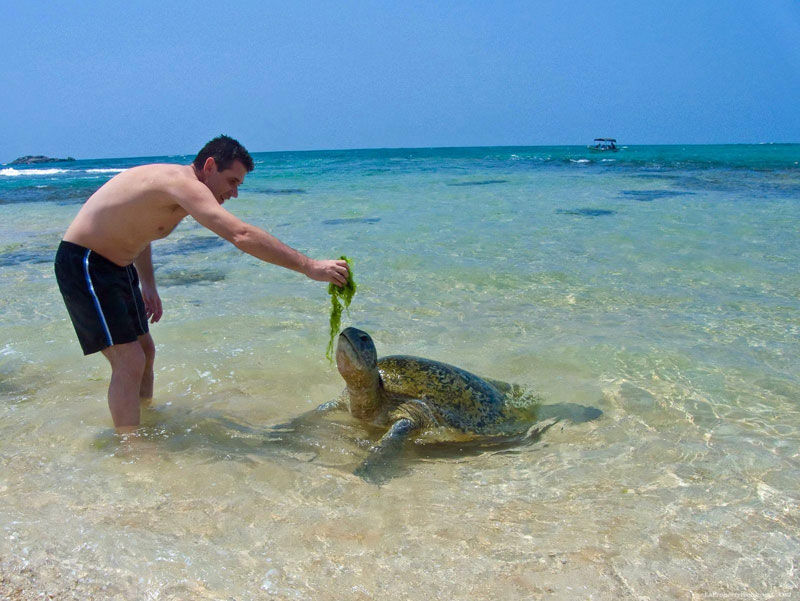
Unawatuna beach draws both local and foreign visitors who have come to love this paradise isle profoundly, as well as the newbies. Unawatuna brings to life incalculable resorts, hotels, restaurants and small kiosks selling various goodies from seafood to clothing. Although most Galle town beaches on the one hand lure visitors through its irresistible magnetism of sun, sea, sand and relaxation, Unawatuna beach is all those and also an ideal place to take a dip in the ocean or indulge in some waters sports with family. Take the Southern Expressway from Colombo for a quick beach getaway or even a spot of sea turtle watching. For beautiful weather and calmer seas visit in November or April. The beautiful bay of Unawatuna was formerly renowned worldwide for its beach but erosion has shrunk it, although its popularity for after-beach action remains undiminished.
Nilaveli Beach
Here’s where turquoise waters of the Indian Ocean kiss the sands, where heart beats rise and fall to its timely harmony. It’s not always that you see paradise in all its splendour, at Nilaveli, under 20 kilometres from Trincomalee town, the simplest pleasures are usually priceless. Whether you engage in a short boat ride to Pigeon Island, a delightful little landmass with its own coral reef, a few minutes from the coast, scuba diving, snorkeling or even waiting it out on the Nilaveli shore building sandcastles – any pick for that matter is quite surely going to be an experience that should not be missed. This maritime escape has also had its share of history, with its days of yore spanning as far back as the Second World War. Best recommended times for visits are May to September.
Passekudah Bay and Kalkudah Beach
Located in the East Coast of Sri Lanka, a visit to the shores of Passekudah is an experience in itself. Passekudah Bay is to the north of Batticaloa nestled on one side of Kalkudah beach. A perfect spot for sea-bathing, Passekudah Bay’s flat bed is a great opportunity to take advantage of a good and safe wade or swim to as far as 200 metres from the shoreline. The shared shores of Passekudah and Kalkudah are reef secured and thus the ocean waves are a lot calmer in this part of the Eastern Coast. Around dawn, and if you’re lucky enough to be up that early, sights of deep sea fisherman bringing back the previous night’s catch on to the beach can be seen, where many vendors from the island over await their best buys. The Kalkudah beach is ideal for surfing and wind surfing during the month of September, which is also considered the best month to visit the East Coast.
Arugam Bay Beach
Arugam Bay is famous for its surfing points that attract surfers from around the world. Many of them make Arugam Bay their home during the surfing period, which is from April to October. Arugam Bay Point, which is at the tip of the bay is considered to be an advanced point, where the waves can rise to a height of five to ten metres depending on the swell and oceanic conditions. As such Arugam Bay point is a haven for experienced surfers. The actual ‘bay’ of Arugam Bay is peppered with small cosy hotels. One area of the beach is full of fishing boats as that is the livelihood of the coastal area, but this does not disturb the surfers.
Negombo Beach
An Ideal beach town for sun and sea lovers and about an hour’s journey from Colombo, Negombo is also a short trip from the airport in Katunayake. With fabulous sunsets, strolls along the shore, little shops selling garments and souvenirs, live bands playing, restaurants peppering almost the entirety of the seaside strip, water sports at the beach park; fishing, kite surfing, snorkeling, scuba, are a part of the everyday sights, sounds and things to do, when in Negombo. This beach town is easily accessible from E03 expressway while leaving from Colombo to the airport or after arrival in Sri Lanka. A short stay on your way, if time permits, would be something to experience.
Galle Face Green
With activities spanning from kite flying, to fishing, to football and beach volley ball to exercising on the Green lawn facing the blue, to jogging alongside the ocean, from chomping down on hawker recipes that line the walkway just over the beach, to an easy check-in at the many star as well as budget hotels conveniently rimming the shore, and most of all before you do, playing a game of tag with the frothy waves until you finally give up…. Galle Face Green, bustles with life, long into the evening. Located close to the south of Fort town, Galle Face Green is a renowned landmark in Colombo. The opportunity to make the most of the sea, sun, stars, sand and stay is right here by this lively coastal marvel.
Kalpitiya Beach
Two words; Whale. Watching. But there’s always the ever so charming beach to make the most of your trip to Kalpitiya. Be there as early as seven in the morning and head off on a boat from coast to spot the spectacular creatures of the sea, dolphins and whales. Expect to see giant flips of tails or even flashes of playful curiosities from the friendlies. February to March is the best recorded times for sperm whale sightings, and acrobatic pods of spinner dolphins. The rare humpback dolphin is also been known to show up in the waters of Kalpitiya. November to April is recommended for calm seas and the sun kissed beach and a 160 kilometre journey from Colombo is well worth it for not only is the ocean safari breathtaking, unless your prone to a bit of sea sickness, but fun on the beach is equally pleasurable.
Tangalle Beach
Hidden deep in the southern coast, the beaches of Tangalle are made for the visual admirer. With the ocean set in dark blue and you with a fresh drink in your hand ready for a relaxing stay, then you would be in the right place. If you do fancy a spot of sea bathing then head west of Tangalle town to where a few naturally secured bays between rocky promontories caress calmer waters. Sunbathing on the other hand is recommend for the east part of town where the warm sandy beaches are far too irresistible to pass on a tan. Take the Southern Expressway to Tangalle to cut your journeying time by half and be sure to keep these months in mind; November to April and May through October, for best climatic conditions.
Bentota Beach
Calmer ocean, scuba, snorkeling, sailing, deep-sea fishing, water skiing wind surfing, kayaking or canoeing, but who’s counting. Bentota beach is equipped for activities for virtually all sea goers looking to have a great time. Even the choice of accommodation has its advantages from luxury to budget. Finding places to stay is quite convenient if you book early or even if you’re passing through. However during peak season, it may be a task to infiltrate. This part of the southern coast is easily accessible via the Southern Expressway. Best recommended times for safe swimming conditions plus a range of other water sports and excursions is November through April.


Most Beautiful Waterfalls in Sri Lanka
the teardrop shaped country, is quite well-known for its gorgeous waterfalls. Many of these hundreds of waterfalls in Sri Lanka are inaccessible and that perhaps makes them all the more magical. The ones accessible are no less stunning either – strong gushes of water falling with full force from an altitude that gives you goose bumps. To top it, they are surrounded by lush green forests and rocky terrains. If that sounds like a landscape you often imagine yourself in, it’s time to realize your dreams.
From an exhaustive list of Sri Lankan waterfalls, checkout the ones that you must visit on your first trip to the country. Listed in ascending order of height, these falls are popular, easily accessible and absolutely bewitching at the same time.
1. Baker’s Falls
Splashed by the brightness of pink-purple Rhododendron and lush green ferns, Baker’s is a popular waterfall in Sri Lanka. Named after the famous British explorer, Sir Samuel Baker, it is among the widest waterfalls in the country that forms many streams as it comes down.
Height: 20 meters
How to Reach: Baker’s is an easy short trek from Horton Plains National Park.
Tip: Avoid it during the rainy season, both the path and the waterfall are quite risky at that time.
2. Rawana Ella
Expect some crowd as Rawana is a popular fall in the country. One of the widest falls in Sri Lanka, it looks absolutely spectacular in the rains. The water level however decreases substantially during the off season. It is named after Ravana who also appears in the Indian epic Ramayana.
Height: 25 meters
How to Reach: Just a 20-minute drive from Ella in Badulla.
Tip: Don’t miss the Ravana Ella cave, which is a little more than 11 km from Bandarawela.
3. Bopath Ella
mong many picturesque Sri Lankan waterfalls, Bopath is a unique one. It derives its name for its resemblance to the sacred Bo Leaf. The most striking feature is its shape, taken as it flows through two narrow rocks and then widens into a breath-taking cascade.
Height: 30 meters
How to Reach: Located in the village Agalawatte, it is easily accessible by car.
Tip: A designated catchment area is safe for tourists and locals to have a bath.
4. Dunhinda Falls
There is no way you can miss Dunhinda while talking about most beautiful waterfalls in Sri Lanka. Formed by a diversion of Badulu Oya River, it is best known for a smokey surrounding spray.
Height: 64 meters
How to Reach: 5 km from the city of Badula can be covered in a tuk-tuk, but you need to walk the last 1 km.
Tip: Enroute you will see Kuda Dunhinda, another captivating fall, but the path is muddy.
5. St Clair’s Falls
Called the Little Niagara of Sri Lanka, St Clair’s is formed by Maha and Kuda falls. It gets its name from neighboring tea estate, and is undoubtedly among most awe-inspiring waterfalls in Sri Lanka.
Height: 80 meters
How to Reach: It is 3 km away Talawakele, a town in town in Nuwara Eliya. There is a 500 meters walk through the tea gardens, just before the fall.
Tip: The surrounding tea gardens are perfect to relax for a while. Enjoy the beauty of the place before heading back.
6. Devon Falls
19th among the highest waterfalls in Sri Lanka, Devon stands out for its lovely tiered formation. Named after an English (yes, again!) coffee planter, Devon is also popular as the ‘Veil of the Valley’.
Height: 97 meters
How to Reach: 6 km away from Talawakelle town, which falls on the A7 highway (Colombo-Nuwara Eliya).
Tip: If you are game for an adventure, you can reach the base of Devon by taking a descent through the tea estate. Contact the locals to know the best path.
7. Ramboda Falls
On an altitude of 945 meters above sea level, this scenic waterfall makes for a memorable experience. It is the 11th highest waterfall in the tea country.
Height: 109 meters
How to Reach: Located in Pussellawa, on the A5 highway, it is just 15 minutes away from Katukithula
Tip: Stay at Ramboda Falls Hotel to let your soul soak in the beauty of the region.
8. Kirindi Ella
Kirindi Oya Falls are a sight to behold. Just 5 km away from A4 highway, it’s one of the less famous waterfalls in Sri Lanka. The cascading stream forms a pool at the base, but the descent can be tiring.
Height: 116 meters
How to Reach: 7 km from Kuttapitiya road, which is reached by taking a left 600 meters before the Kuttapitiya junction.
Tip: Be careful of the water level, especially when closer to the base.
9. Diyaluma Falls
2nd highest among waterfalls of Sri Lanka and 6th highest in the world, Diyaluma Ella is an absolutely majestic view. It acquires a horsetail shape after falling and leaping over a cliff.
Height: 220 meters
How to Reach: It is 6 km away from Koslanda, Badulla District.
Tip: The last few kilometers of the road are in a bad condition.
10. Bambarakanda Falls
Surrounded by a dense pine forest, the highest waterfall in Sri Lanka is one of the most serene locations in the area. This horsetail fall is formed by one of Walawe river’s tributaries.
Height: 263 meters
How to Reach: Off the A4 highway (Colombo – Batticaloa), it is a 5 km walk in a narrow valley from Kalupahana.
Tip: You can cover the last 5 km by road, but the road is bad, and can be worse during the rains


National Parks & Wild life in Sri Lanka
Sri Lanka is a wild life hotspot with countless national parks and forest reserves. And if you happen to be here in the paradise island, an experience that you cannot miss is a visit to a national park. Safaris can be arranged from any hotel or you can simply hire one of the many safari jeeps to take a wild ride into a park to see, up close the many amazing beasts that roam the island. Yala National Park, well known to have the highest leopard densities in the world is a must in your travel itinerary while the Udawalawa National Park with its magnificent tuskers and elephants in large numbers will keep you on the edge of your seat.
Wilpattu National Park
Located in the Northwest coast of the island, Wilpattu National Park is a wonder in its dry zone habitat.
No wildlife excursion can be truly experienced unless you go on safari and Wilpattu National Park is no stranger to expeditions thus far and you can be sure that leopards will almost always make a grand entrance here.
Jungle fowl scurrying along, peacocks on parade, a herd of spotted deer here and there, glimpses of barking deer… Crocodiles sunbathing, flycatchers catching flies and other insects, star tortoises and breathtakingly large monitor lizards, that keep you wondering what on earth they’ve been feeding on to get so big; elephants, make up only a few of the residents of Wilpattu.
Located in the Northwest coast of the island, Wilpattu National Park is a wonder in its dry zone habitat for animal and plant life. The Park is easily accessible from Anuradhapura if travelling through the north central regions or from Puttalam on the western coast. February and October and considered the best months to visit.
Yala National Park
A national park that is believed to have the highest density of leopards in the world.
Wild yet powerfully majestic, Yala National Park is leopard country and is believed to have the highest concentration of these apex predators on earth. If the thrill of a safari through the rugged, unmerciful bush sounds elephant enough, then here’s the call of the wild with its truest dose of candour.
Moving on to the other love of the wilderness, the Asian elephant – a presence of sheer valour –amongst species of indigenous and migratory birds, ingeniously solitary reptiles, the crocodiles of course steal the show, and endemic plant life, are only a sneak peek into what’s in store.
Alongside pockets of thick shrub there are expanses of barren terrain, and just beyond beckons the rush of the Indian Ocean. Yala National Park teems with as much fauna as there is flora, set within a land extent of over 370 square miles.
With two separate main entrance gates, Katagamuwa and Palatupana, the Park is easily accessible from 6am to 6pm from the city of Kataragama. The Park is closed from September to mid October every year.
YALA is Sri Lanka’s most emblematic national park, set in the ancient Ruhunu kingdom in the Southern Province. Remnants of past civilizations, covered with the jungle tide, form the stamping grounds of wild animals of a great variety. Established as a national park in 1938, Yala comprises five blocks sprawling over 979 square kilometres.
The attraction of the park lies in the arid, wild, open land which is punctuated by grasslands, shrubs, tanks, lagoons, water holes and sand dunes. Water gathers in the forms of streams, tanks, waterholes, rock pools, and lagoons. Each terrain, different in character, provides glimpses into wildlife in their most intimate, beautiful and dramatic moments.
The most charismatic and sought after animals in Yala are the leopard, the elephant and the sloth bear. But there are 41 other mammal species, among them the jackal, the sambhur, the spotted deer, the loris, the crocodile, wild cats, wild boar and buffalo. Of birds there are 215 varieties, seven of them endemic to Sri Lanka: Sri Lanka grey hornbill, Sri Lanka jungle fowl, Sri Lanka wood pigeon, crimson-fronted barbet, black-capped bulbul, blue- tailed bee-eater and brown-capped babbler. During the migrating season, birds flock in plenty and jostle for space in waterways, a display of rare, beautiful and unusual plumage. Raptors like the crested serpent eagle can be seen wheeling in high skies, perpetually looking for prey.
There is also a teeming reptile population, the most charismatic species being the crocodile and sea turtle. Associated with Yala is also a wealth of traditional lore, among these the story that mythical monarch Ravana’s kingdom used to be by the shore here. A large number of ancient unused tanks lie in the heart of the wilderness.
Sithulpawwa, an ancient monastery that housed 12,000 arahants, is a site of pilgrimage now within the park. Along the way are the Magul Maha Vihara and Akasa Cetiya which stand amidst beaches or wild rocky terrains of serene natural beauty. There are also historical sites like battlefields, imbued with the romance of historical tales.
Kumana National Park
Bird enthusiasts would love this place without a doubt.
Kumana is well known for its wildlife and more so for its migratory and indigenous bird population. Sightings of changeable hawk eagles, painted and rare black necked storks, egrets, godwits, ibis and many more are possible by the many lagoons, and reflected in eyes of curious, wandering jackals.
While on safari, watch out for the elephants, spotted, and sambhur deer. They too are quite active around watering holes like the Kumana Villu swamp, and in pockets of lush foliage.
Kumana is situated in the eastern district of Ampara and is 12km south of Arugam Bay. There is a turn off just before the town of Panama, which leads to the National Park.
Bundala National Park
Bundala is well known as a preferred destination to see migratory birds in abundance.
Home to scrub jungle, wetlands, lagoons, salt pans, sand dunes and a long stretch of coast, Bundala National Park’s terrain is blessed with many faces of landscape in unison with unlimited yet protected fauna.
Known for its incredible spectacles of migratory birds, the Park is a great friend to bird enthusiasts from the world over. While glimpses of elephants are not as common as the crocodiles (estuarine as well as saltwater), much anticipated are sightings of deer, langurs, the tusky (not to mention a tad touchy) wild boar, and even the spotted fishing cat.
Although Bundala National Park is a fairly small area of sanctuary, nearly 30 square miles, its diversity of species is rich and therefore can be a quick safari trip if you want to make the most of the island’s wilderness in a short space of time.
Bundala is accessible via many coastal cities: Hambantota, Galle, Matara and also through routes from southwestern regions: Ratnapura, Pelmadulla and Embilipitiya. Opportunities to visit the Park span throughout the year, with December being the month for bird watching expeditions.
Minneriya National Park
Witness 'The Gathering' where countless herds of elephants congregate.
With just over 30 square miles, Minneriya National Park is a thrill-packed alternative to the more vast expanses of other wildlife sanctuaries.
Made of grasslands, thick scrub, and the wildlife that roam their particular territory, the Park is fed by its giant reservoir which is also its life-blood, especially in the dry months of June through September, which are the best times to visit. A diversity of animals roams within the vicinity of the reservoir, as food and water grow scarce elsewhere in the Park.
A must see spectacle is ‘The Gathering’ where countless herds of elephants congregate near the Minneriya reservoir. This is believed to be the highest number of elephants in one place, which is why it is a sight that is not to be missed. The Gathering is also known as the sixth greatest wildlife spectacle in the world and takes place between July and October.
Also deer, toque monkeys, and even the occasional leopard, are part of the sightings at Minneriya National Park. Migratory and indigenous birds are usually seen making good use of the environment.
Udawalawe National Park
An ideal place to see elephants in large numbers.
For the love of nature, for the love of those life-sized creatures that roam the scrublands of this considerable expanse of 119 square miles, Udawalawe National Park should not be missed.
The Park is home to a population of over 400 elephants and the probability of seeing them while on safari is almost always guaranteed. The Walawe Reservoir is also encompassed within the Park, spanning over 3,000 hectares; it’s a favourite elephant hangout during times of water scarcity.
Over 180 species of birds, the mugger crocodile and sightings of more reptilian, plant life and other mammals too, are abundant spectacles at the Park.
Udawalawa can be accessed through the city of Ratnapura following the Pellmadula-Embilipitiya Road and the Park can be visited throughout the year. November to March is recommended for bird watching expeditions.
Marvels of Maduru Oya
Approximately 265 kilometres from Colombo, lies a treasure by the name of ‘Maduru Oya.’ Established as a National Park of Sri Lanka under the Mahaweli Development project, the park provides a sanctuary to wildlife. However, that is not all. This destination posses a rich history in engineering and a lot of adventure with an army camp being situated there
Wonders of Maduru Oya
One of the most important features of Maduru Oya is the ancient earthen dam and sluice built during the reign of King Mahasena. This 30 feet high, 30 feet wide and 219 feet long damp is being marveled at as it proves that the ancient Sri Lankan engineers were very knowledgeable and highly skilled. Built with slabs and bricks this dam can be found even today.
A walk on the dam to enjoy the breathtaking scenery will surely make you feel invincible with the rough yet refreshing wind on your face. Moreover, Maduru Oya prides itself for being the home to many endemic species and threatened mammals such as Elephants, Sloth bears, Leopards and many more.
Out into the wildlife
A visit or stay at the army camp is sure to widen ones experience at Maduru Oya given that it isn’t only enjoyable but also educative. If you are a reptile lover and looking to pet snakes of any kind, the camp will offer you that chance and if you are not they will surely ease your scare or give you tips on how to protect yourself. Adding to the excitement, the sunset of Maduru oya is breathtakingly beautiful and cannot be expressed by words.
Leaving Maduru Oya can be saddening but the memories you take after the experience will be as beautiful as the destination.
Chundikulam bird sanctuary
The peninsula has a natural heart that throbs wildly, and you can discover it at its pristine best at Chundikulam. The name may ring a bell only for a few people. But Chundikulam National Park became a bird sanctuary as far as 1938. It is the best place to capture birds in their most unguarded, spontaneous, intimate or dramatic moments. Throw in some rare and elusive mammals like the fishing cat, the sloth bear and the jungle cat, and you will agree it is a naturalist’s paradise.
Chundikulam sits in the middle of the strip of land that joins the Jaffna peninsula to the rest of the island. At its east is the Indian Ocean and at its west the Jaffna lagoon. In this arid, wild land, many kinds of habitats have evolved: beaches with sand-dunes, salt marshes, wetlands, thorny scrublands, dry forests, tanks, mangroves and of course the lagoon. This means that a great number of birds, favouring a great number of terrains, can flock and thrive within the area.